
Hire a new front desk agent, spend two weeks training them on your PMS, and just when they're productive, they leave?
Multiply that across a year and you've lost weeks of management time, plus the revenue that slipped through each learning curve.
The problem is rarely the software. It's the training approach.
Hotels that onboard staff quickly use a practical process, not better technology.
The Real Costs of Poor Onboarding

A 30-room boutique hotel with 40% annual turnover in front desk positions might train four new staff per year.
If each training period takes two weeks of hands-on shadowing, that's eight weeks of reduced productivity from your senior staff.
Eight weeks where check-ins take longer, billing errors creep in, and upsell opportunities disappear.
What Makes Training Take So Long
Most PMS training fails because it teaches everything to everyone.
-
Your front desk agent doesn't need to understand revenue reports on day one.
-
Your housekeeping supervisor doesn't need to learn how to process refunds.
So, how do you actually train a new hotel staff properly?
Step 1: Structure PMS Training by Role
The right question to ask before training anyone is: What does this person need to do on Day 1?
Not week one. Day one.
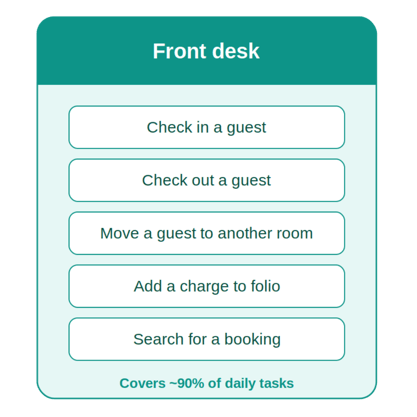
Front desk staff need check-in, checkout, and basic billing. Housekeeping needs room status updates. Reservations staff need to check availability and rates. Start there. Add more later.
Front Desk
Five Tasks to Learn First
New front desk staff should master these five things before anything else:
1. Check in a guest (with or without a prior booking)
2. Check out a guest and close their bill
3. Move a guest to a different room
4. Add a charge to a guest's account
5. Search for a booking by guest name or booking number
Think you might need this? - 📋 Front Desk Day-1 Checklist - A one-page reference card your staff can keep at the counter.
Master these, and new staff can function independently for most situations.
Housekeeping: Keep It Simple
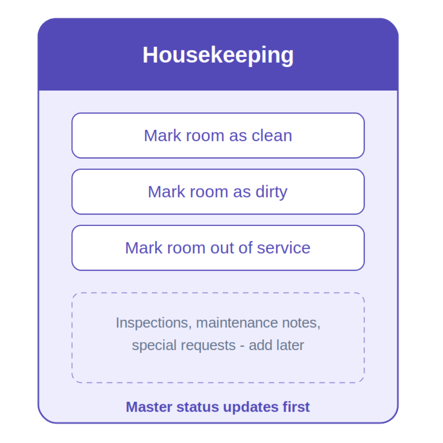
Housekeeping staff interacts with the PMS primarily for room status updates.
Their training should focus on one thing: marking rooms as clean, dirty, or out of service.
Everything else, including inspections, special notes, and maintenance requests, comes after they've completed the basic status update for two weeks straight without errors.
Want to use this? - 📋 Housekeeping Room Status Checklist - A shift-by-shift guide for marking rooms correctly from day one.
Reservations: Price and Availability First
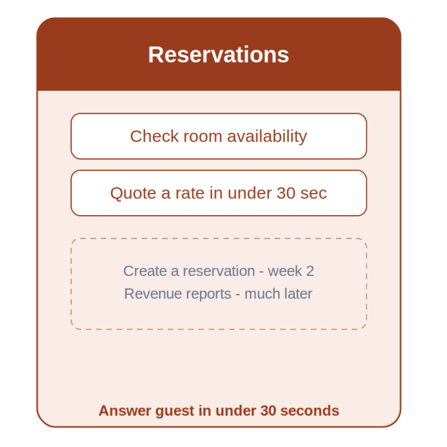
Reservation staff need to answer two questions quickly:
"Do you have rooms available on these dates?"
"What's the rate?"
Before teaching them how to create reservations, ensure they can locate this information in under 30 seconds.
Step 2: Set Up the Four-Week Training Timeline
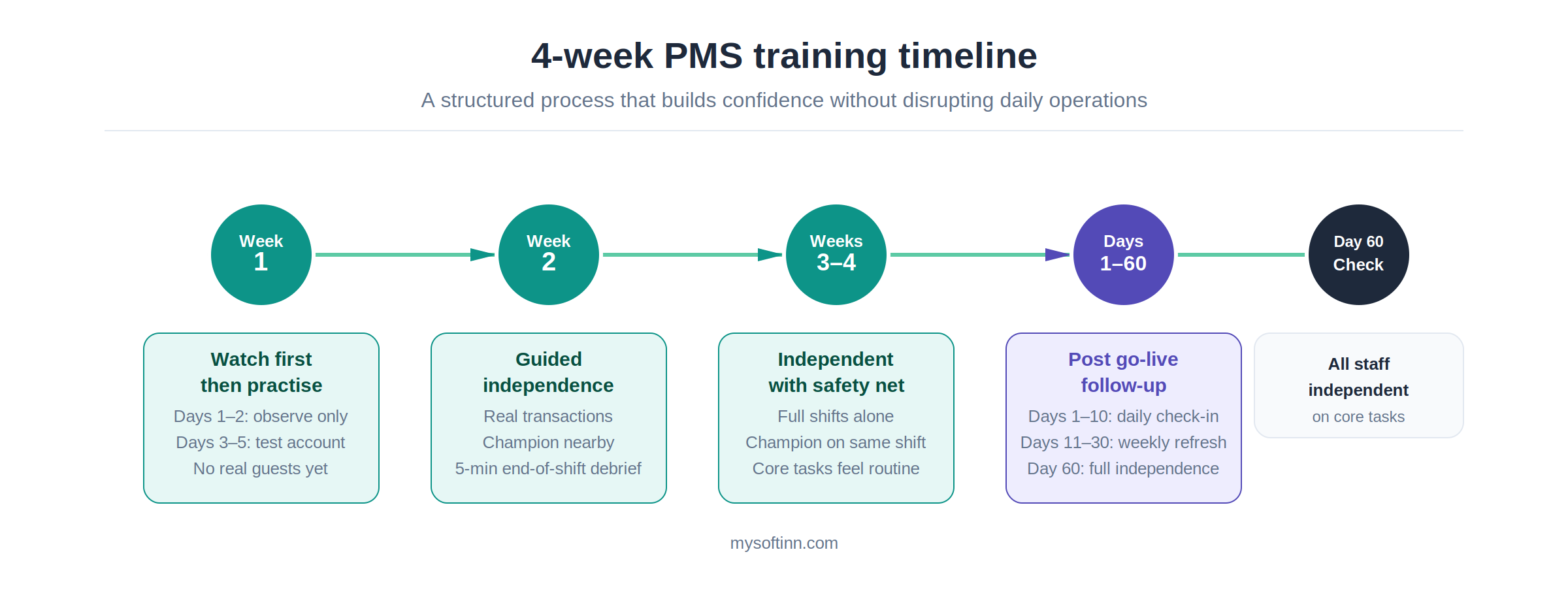
Not sure where to start? - 📅 4-Week PMS Training Schedule - A ready-to-use template for hotel owners and managers.
Week one focuses on observation and guided practice. Week two moves to supervised independent work. Weeks three and four transition to full independence with support available. Here's how to structure it.
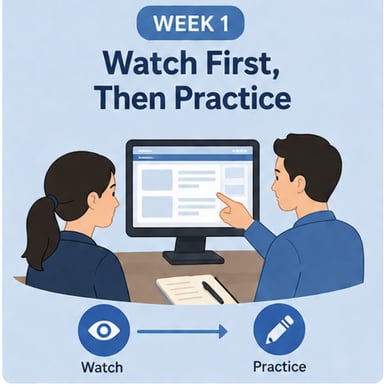
Week 1: Watch First, Then Practice
Days 1–2: New staff watch an experienced colleague handle real bookings and check-ins. No touching the system yet, just watching and taking notes on the order of steps and where things are on screen.
Days 3–5: New staff practice the same tasks in a test environment, not with real guests. A trainer watches and lets them make mistakes. It's better to get the errors out now than during a busy check-in queue.
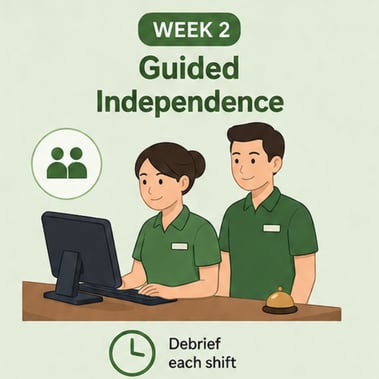
Week 2: Guided Independence
New staff begin handling real transactions with a colleague standing nearby.
The colleague doesn't touch the system unless the new staff member asks for help or is about to make an error that affects a guest.
End each shift with a five-minute debrief: What went well? What was confusing? Which tasks still feel uncomfortable?
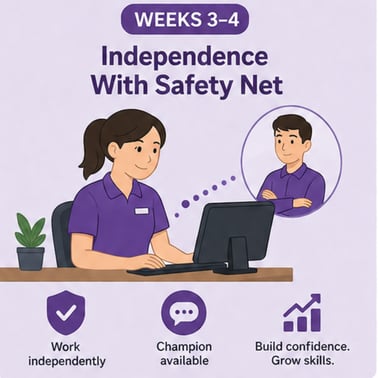
Weeks 3-4: Independence With Safety Net
Staff work their shifts normally. A designated "champion", an experienced colleague who knows the system well, is available on the same shift but not standing over their shoulder. Questions are encouraged, but the new staff member attempts tasks independently first.
By week four, most basic tasks should feel routine. Advanced features and edge cases can be introduced gradually over the following months.
Use Practical Tools That Speed Up Learning
-
Quick-Reference Cards
One page, laminated, kept at each workstation.
Steps and screenshots for the five most common tasks so staff can solve problems without asking a colleague.
-
Recorded Screen Walkthroughs
A 3 to 5 minute walkthrough of each core task.
Staff re-watch when stuck instead of pulling a colleague away from guests.
Softinn has self-paced video guides covering all major functions.
-
The "Common Errors" List
A running document of mistakes new staff make and how to fix them. When they hit a familiar error, they solve it themselves.
Step 3: Handle the First 60 Days After Go-Live
Training doesn't end when the initial sessions finish. The first 60 days determine whether correct habits stick or bad workarounds become permanent.
Days 1-10: Daily Check-Ins
Spend 10-15 minutes at the end of each shift collecting questions and addressing confusion. Keep a list of recurring issues. If three staff members ask the same question, your training materials need an update.
Days 11-30: Weekly Refreshers
Move to weekly 30-minute sessions. Focus on the three most common errors from the previous week. Walk through the correct process as a group. This repetition cements the right approach before bad habits form.
Days 31-60: Authority Review
By day 30, review each staff member's performance. Are they completing core tasks without assistance? What gaps remain? For anyone still struggling with basic functions, schedule additional one-on-one training before moving forward.
Day 60 is your checkpoint. Staff should be fully independent on core tasks. Documentation should be updated based on the questions that emerged during the first two months.
Step 4: Measuring Whether Your Training Actually Works
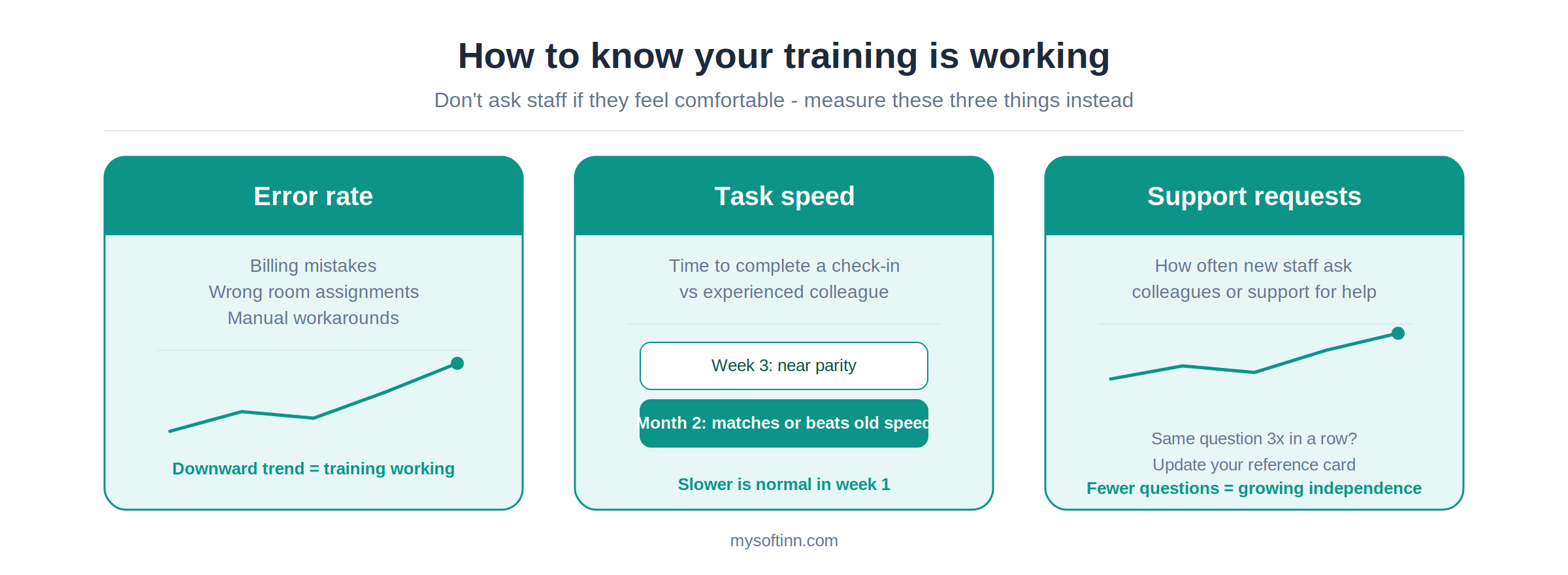
Asking staff if they feel comfortable produces unreliable answers. Measure outcomes instead.
-
Track Error Rates
Monitor billing errors, incorrect room assignments, and manual workarounds during the first month. A downward trend means training is working. Persistent errors in specific tasks show where additional training is needed.
-
Time Core Tasks
How long does a check-in take with your new staff versus experienced colleagues? Initially, new staff will be slower. By week three, they should approach parity. By month two, they should match or exceed the old system's speed.
-
Monitor Support Requests
How often do new staff ask colleagues or contact support for help? Declining questions indicate growing independence. If questions about the same task keep recurring, your quick-reference materials need improvement.

Special Considerations for Small Hotels
Boutique hotels and small independent properties face unique training challenges.
When You Can't Have Two Staff on Shift
Extend the test environment phase.
New staff should practice in the test system until they can complete core tasks without hesitation before touching a live booking.
Cross-Training for Coverage
Prioritise training based on what they'll do most frequently.
A night manager who primarily handles check-ins trains on check-ins first.
Revenue reports can wait until they're comfortable with guest-facing tasks.
The Owner-Operator Reality
Record yourself completing each core task once.
New staff watch the recordings, practice in the test environment, and then bring you specific questions.
You're a resource, not a constant presence.
In Conclusion
Look at your own front desk tomorrow. Watch how long it takes a new staff member to complete a check-in. Count how many times they ask a colleague for help.
If those numbers aren't improving week over week, your training process needs attention, not your software.
How Softinn Reduces Your Training Burden?
Softinn is built for boutique hotels and small independent properties in Southeast Asia.
The interface keeps daily tasks front and centre. No digging through menus, no steep learning curve for new staff.
Every subscription includes monthly online training sessions and video guides at no extra cost. Your team gets help when they need it, not when a vendor decides to schedule a visit.
If you are curious to see how it works, you are welcome to try it with your own team first.
- Start a free trial - Set up your property and explore at your own pace. No pressure, just try it
- Join a product demo - A 30-minute live walkthrough. Ask us anything.


Tai Pei Shi
Hi, I am Pei Shi. I am a Technopreneurship student and digital marketing intern in Softinn.
Comments
Recent Posts
When the Minimum Wage Goes Up, What's Your Hotel's Next Move?
Why Hotels Should Offer Reserve Now, Pay Later to Guests
API, AI, Integration: Should Your Hotel Build or Buy?
The Best AI Preparation Your Hotel Can Do Has Nothing to Do With AI
The e-Invoice Exemption Increased to RM3Million : What It Means For Your Hotel?