

Something has shifted in hotel technology conversations over the past year or two. Almost every vendor pitch includes the word AI. Almost every business, including the hotel owner we speak to has heard it, and many are either very excited or very confused, sometimes both at once.
Underneath both reactions, we often find the same assumption, that AI means less work. That once it's in place, things will largely run themselves.
That assumption is worth examining honestly, because we've seen it lead businesses including hotels toward decisions they later regret.
The Fantasy Version of AI
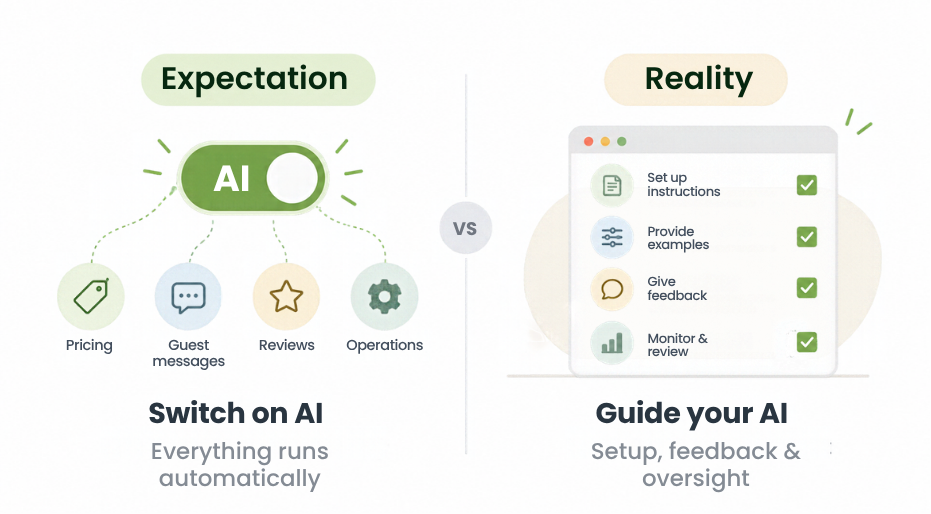
The picture most people have looks something like this: subscribe to a platform, switch on the AI feature, and it handles pricing, guest communication, reviews, operations automatically, intelligently, with minimal input from you. You check your dashboard occasionally. The hotel runs.
It's an appealing picture. But it's not how it works.
We speak to hotel operators regularly, and the ones who've been disappointed by AI tools almost always describe the same experience: They expected a magic pill. They got a tool that needed feeding, guiding, and managing, and nobody told them that upfront.
This isn't a criticism of AI as a technology. AI is genuinely powerful and growing more capable. But capability is not the same as autonomy. AI does not arrive knowing your hotel, your guests, your pricing philosophy, or your standards. It learns from data you provide, decisions you make, and feedback you give it.
There is a principle we believe in at Softinn, and it applies here is, nothing comes free.
If you want an easier operation, you first have to do the work of understanding what needs to be made easier, and how. That work doesn't disappear just because AI is involved. It moves upstream, into the thinking you do before you switch anything on.
What AI Actually Needs From You
Before AI can help you, you need to know what you want help with. That sounds obvious, but it's where most businesses get stuck.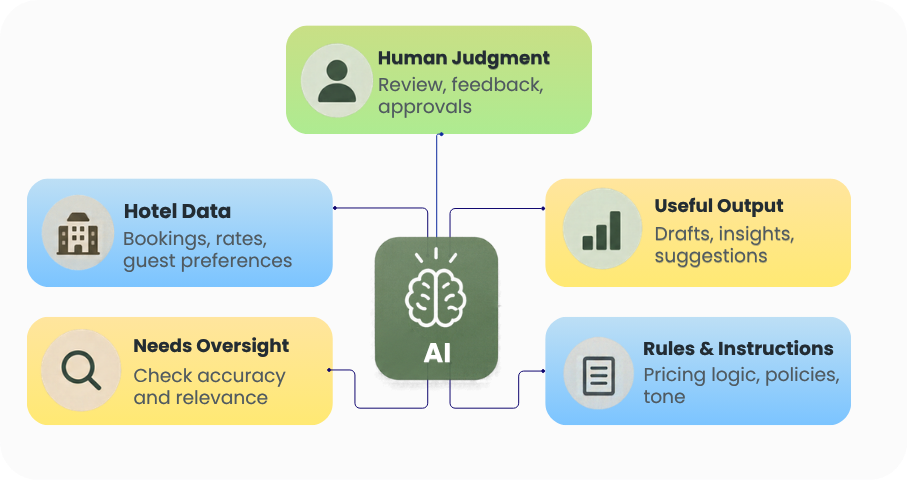
-
If you want AI to assist with dynamic pricing, someone needs to define the parameters, such as your floor rate, ceiling rate, which events and seasons should influence the logic. AI optimizes within a framework. It cannot invent your business strategy.
-
If you want AI to help respond to guest reviews, it needs your tone, your brand voice, and a human checking the responses it produces, because some will miss the mark.
-
If you want AI to surface patterns in your booking data, someone needs to understand what they're looking at well enough to act on it.
There's an old computing principle that hasn't changed in the age of AI, which goes like this "garbage in, garbage out". The quality of what AI produces reflects the quality of what you put in, and the clarity of what you ask of it.
What AI genuinely helps with in hotels
To be fair, there are real, meaningful applications such as routine guest communication, revenue pattern analysis, translation, content drafting. These are genuine time-savers when implemented well. But "when implemented well" is doing a lot of work in that sentence, and it always requires setup, oversight, and ongoing human judgment.
The Question to Ask Every Vendor

When a tech vendor tells you their platform has AI, the most useful question is not "what can it do?" It's: "What do I need to provide for it to work well?"
If the answer is "nothing, it handles everything automatically", then pause. That's either a misunderstanding of how AI works, or a description of something very narrow being marketed as something much broader.
Vendors who understand their own product will tell you what the AI does, what it needs from you, what it costs beyond the subscription fee, and what realistic results look like in the first 6 months.
At Softinn, these are the conversations we try to have, before a hotel signs anything, not after. We'd rather set honest expectations and be held to them than promise something we can't stand behind.
Human is still the master
The hotels getting real value from AI are not chasing every new feature. They're clear on what problem they're trying to solve, they set things up properly, and they keep a human hand on the steering wheel.
It's a principle that shapes how we think about product at Softinn. Our self check-in kiosk, for example, isn't designed to replace your front desk. It's designed to take the transactional work such as the verification, key issuance, payment off your team's plate, so the humans in your hotel can do what no machine genuinely can, like make a guest feel at home. The technology serves the human. The human still leads.
AI works the same way. Think of it as the most capable assistant you've ever had, the one who is always available, never tired, and gets better over time. But an assistant still needs direction. You are still the one who knows your hotel, knows your guests, and makes the calls that matter.
The question is not whether AI can help your hotel. The question is whether you're willing to do the thinking required to make it work.
Disclaimer: The views in this article are the author's own and are intended for informational purposes only. AI capabilities and implementations vary significantly across platforms. Evaluate any technology based on your business's specific needs and operational readiness.
Want an honest conversation about where hotel technology is headed and what's worth considering for your property today? Join our next product demo session.
Reserve your spot →


Caren
Caren is a Co-Founder of Softinn and a qualified accountant (ACCA). She didn't set out to be a blogger. She just noticed things that needed to be said. After years of building a team, hiring, and developing & testing software for independent hotels across Malaysia and Southeast Asia, she writes here to share what she wishes someone had told her - about people, and about the tech ecosystems they work with.
Comments
Recent Posts
AI Won't Run Your Hotel. But It Can Help You Run It Better.
Google AI Mode for Hotels: What Hotel Owners Need to Know
When the Minimum Wage Goes Up, What's Your Hotel's Next Move?
Why Hotels Should Offer Reserve Now, Pay Later to Guests
API, AI, Integration: Should Your Hotel Build or Buy?