Central argument: Employers aren't just struggling to find skilled candidates. They're struggling to find candidates who are willing to invest in learning before they see a return. The interview questions you ask reveal which camp you're in.
Let me tell you what hiring actually feels like right now, from the other side of the table.
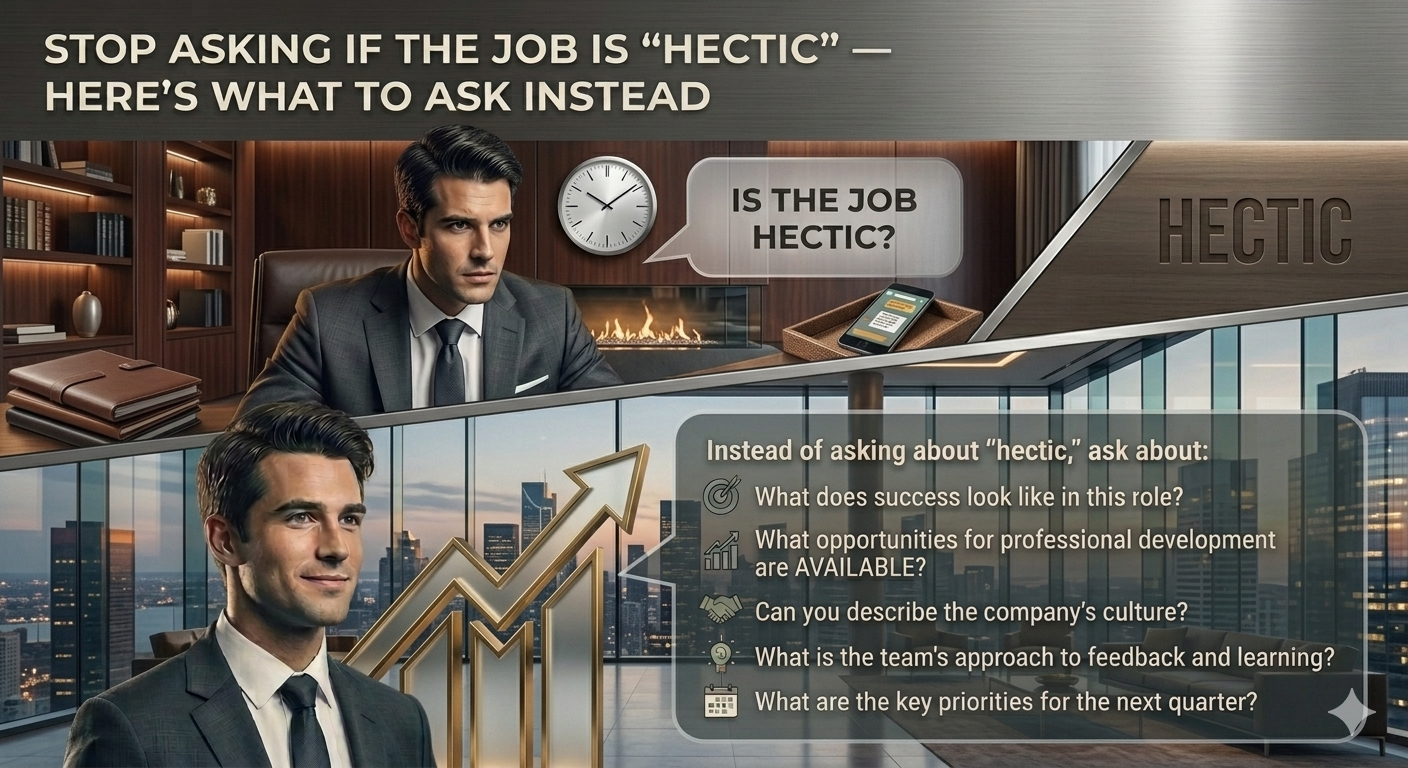
You're interviewing someone. They look good on paper. Then five minutes in, before you've even gotten to the role itself, comes the question: "Is the job very hectic?" Or some version of it. Work from home policy. Overtime expectations. Whether weekends are ever involved.
These aren't bad questions. But when they come first, before any curiosity about the work, the team, the problems you're trying to solve, it tells you something. The candidate has already decided what they're not willing to give. They just haven't figured out yet what they're offering.
That's the hiring problem nobody's saying out loud.
The Instant Return Trap
There's a pattern showing up more and more in younger job seekers. Not laziness exactly, it's something more specific than that.
It's the expectation that results should be visible before effort is fully invested. That a company should prove itself first. That the job should be worth it before you've shown what you're worth in it.
You see it in how candidates negotiate before they've done a single day of work. You see it in how quickly some people disengage when a task is harder than expected. You see it in the interview itself - in questions that are really just screening for how little will be asked of them.
Here's the honest version of what's happening: a lot of candidates don't actually know their own value yet. They haven't tested themselves enough to find out. And instead of leaning into that uncertainty and using a job to figure it out, they try to protect themselves from it by asking whether the job is hectic.
Protecting yourself from difficulty is not the same as taking care of yourself. Worth knowing the difference.
What Employers Are Actually Rooting For
I don't think employers are looking for someone who grinds themselves to dust. That's not the goal.
What they're looking for, and increasingly struggling to find, is someone who comes in curious. Someone who sees the first year as a learning period, not a transaction. Someone who thinks "how do I get good at this?" before they think "what am I getting out of this?"
That person is rare. When you find one, you do whatever you can to keep them.
And here's what makes that person recognisable in an interview. It's not confidence. It's not the grades. It's the questions they ask.
"What does the first 90 days actually look like, or where do most new hires struggle?" That's someone trying to prepare, not protect.
"What's something the team is still figuring out?" That's someone who isn't scared of messy situations.
"What would make this hire a clear success one year from now?" That's someone who's already thinking about outcomes, not just inputs.
These questions don't require experience. They require a certain orientation toward work, one where you expect to be challenged, and you're okay with that.
Knowing Your Value Starts With Earning It
Here's the uncomfortable part.
A lot of candidates come into interviews with a strong opinion about what they deserve - salary, flexibility, title - without having spent much time thinking about what they can actually deliver.
Value is real. It's just not self-assigned. It gets built in the actual doing, in figuring out hard problems, staying with something long enough to get good at it, producing work that holds up. That process takes time. It requires going through a period where you're not yet performing at the level you'd like, and staying anyway.
The candidates who understand this are the ones who quietly become indispensable. They don't arrive expecting things. They arrive ready to build something. And somewhere in that process, they find out exactly what they're worth, because they've tested themselves against real work.
That's not an old-fashioned idea. It's just how skill actually develops.
A Simple Check Before Your Next Interview
Before you walk into an interview, ask yourself: do I know more about what I'm hoping to avoid in this role than what I'm hoping to contribute?
If the answer is yes, that's fine. Just adjust. Spend 10 minutes thinking about what genuinely interests you about the work. What problems you'd be solving. What you'd want to learn. Then write down two or three questions that come from that place.
Not questions designed to protect you. Questions that show you're ready to engage.
That small shift changes the whole dynamic of the conversation. It changes what the interviewer remembers about you. And in a candidate pool where most people are still leading with "is it hectic" - showing up differently is one of the simplest edges you can give yourself.
At Softinn, we build hotel technology and we're a small team - which means the work is real, the learning curve is steep, and people here tend to figure out their own value pretty fast. If that sounds like the kind of environment you want, we'd like to hear from you.
Explore opportunities at Softinn--> Softinn Job Openings



Comments
Recent Posts
The Gen Z Work Myth: Are Young Workers Really That Different?
You Can Look Productive Without Contributing Anything. Employers Know the Difference.
Stop Asking If the Job Is "Hectic" - Here's What to Ask Instead
You've Changed Jobs Three Times in Four Years. But Have You Actually Gone Anywhere?
The Resume Lie Nobody Talks About - Why "Proficient in Excel" Is Getting You Filtered Out