Central argument: Inflating your skills on a resume doesn't just fail to impress employers - it actively damages your credibility, because the people reading your CV know exactly how to test whether you're telling the truth.
There's a line that appears on nearly every resume in Malaysia.
"Microsoft Office: Proficient."
Sometimes it says "Advanced." Sometimes it gets broken down - "Microsoft Excel, Word, PowerPoint." And somewhere in those words sits a quiet assumption: that no one is going to actually test you on it.
That assumption is getting candidates rejected in the first interview. Most of them never find out why.
"Proficient in Excel" Is a Red Flag, Not a Credential
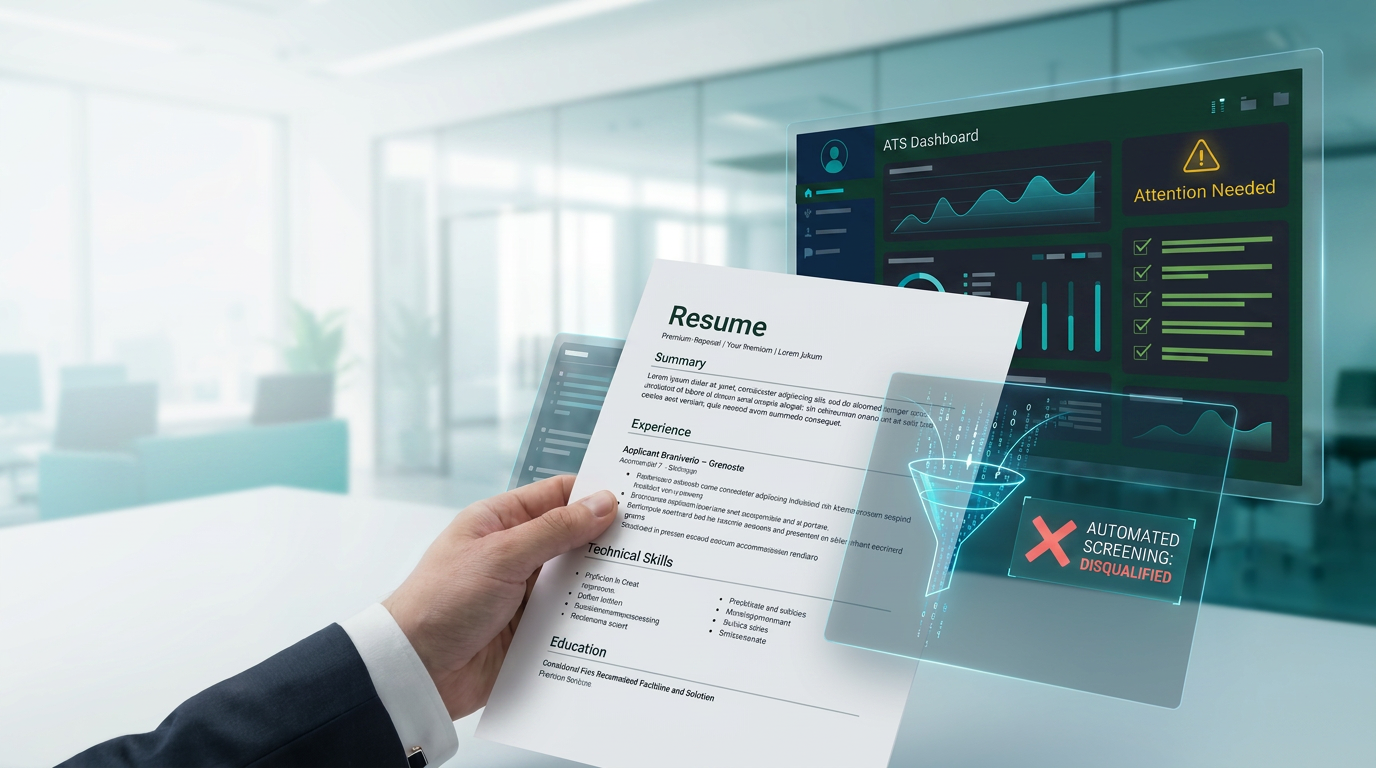
Let's be direct. When a hiring manager sees "proficient in Excel" on a resume, they don't see a skill. They see a risk.
Excel proficiency is one of the most commonly inflated claims on a resume - and one of the easiest to verify. A single interview question does it: "Walk me through how you'd use a VLOOKUP to reconcile two data sets." Most candidates who wrote "proficient" go quiet.
Saying you're proficient when you can format a table and do basic data entry isn't a minor stretch. It's a credibility problem. And once a hiring manager doubts you on something small and verifiable, it puts a shadow over everything else you've claimed.
The same logic applies across the board - languages, tools, certifications, software. Employers have gotten more systematic about checking. They ask follow-up questions. They give short tasks. They call references with pointed questions. The gap between what you claimed and what you can deliver doesn't stay hidden for long.
Why Skills Inflation Backfires More Than It Helps
Job seekers inflate their skills for an understandable reason. They see the job requirement, they're not quite there, but they're confident they can learn fast. The logic is: I'll figure it out once I get in.
That's not dishonest intent. But it is dishonest communication - and the difference matters to employers.
Here's what most candidates miss: employers already expect a learning curve. Most are willing to hire someone at 70% who is self-aware and genuinely teachable. What they can't absorb is someone who claimed 100%, came in at 40%, and now has to be managed through the gap they quietly created.
The problem also compounds. You overstate Excel. You get the job. Now you're in a role where your team assumes a level you can't deliver. Every day, you're playing catch-up while trying not to expose the seams. That's not a career. It's a slow-burning credibility drain.
Contrast that with the candidate who said in the interview: "I'm at an intermediate level - I can handle pivot tables, conditional formatting, and basic data analysis. I'm actively building on Power Query." That candidate just gave an employer exactly what they need to make a decision. And more importantly, they signalled something uncommon: they know where they actually stand.
The Smarter Move: Be Specific About Where You Are
The fix is more straightforward than it feels.
Instead of writing "Excel: Proficient," try: "Excel: Intermediate - comfortable with pivot tables, VLOOKUP, and basic data analysis. Currently building on Power Query and macros."
That's not a weakness. That's calibration. It tells the employer you know what you know, you know what you don't, and you're paying attention to the gap. That quality - honest self-assessment - is genuinely rare, and most employers will take it over a polished claim they can't trust.
Before you write anything on your resume, apply one test: if they ask me about this in the first interview, can I back it up? If the answer is no, reframe it. Name the level you're at. Be precise about the scope. Show the direction you're heading.
Your resume is not a wish list. Every line on it is an implicit commitment: I can deliver on this. The candidates who treat it that way - who resist the temptation to round up - are the ones who build trust quickly once they're hired.
And in a job market where everyone is competing for the same roles with the same phrases, quiet credibility is one of the most powerful things you can bring into a room.
*At Softinn, we build hotel technology for a market that's still going through real digital transformation. We're a small team, which means the people here carry weight and grow fast. If you're someone who wants to actually learn - not just be employed - we'd like to hear from you.
Explore opportunities at Softinn--> Softinn Job Openings



Comments
Recent Posts
The Gen Z Work Myth: Are Young Workers Really That Different?
You Can Look Productive Without Contributing Anything. Employers Know the Difference.
Stop Asking If the Job Is "Hectic" - Here's What to Ask Instead
You've Changed Jobs Three Times in Four Years. But Have You Actually Gone Anywhere?
The Resume Lie Nobody Talks About - Why "Proficient in Excel" Is Getting You Filtered Out